The Buffer Advantage: Why East Coast Wholesalers Are Stockpiling Their Way to Supply Chain Dominance
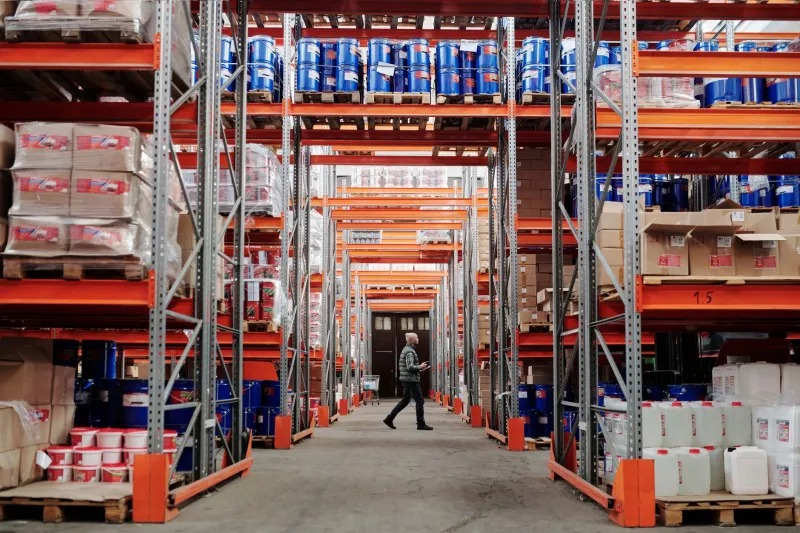
For the better part of three decades, just-in-time inventory management was treated less like a strategy and more like a religion. Lean warehouses, minimal carrying costs, and precisely timed deliveries became the hallmarks of operational sophistication. Consultants sold it. Business schools taught it. Supply chain managers built careers around it.
Then the world stopped cooperating.
Pandemic-era port backlogs, unpredictable overseas manufacturing delays, and a series of demand shocks that no forecasting model anticipated exposed a fundamental fragility in the just-in-time framework. The companies that had stripped their warehouses to the bone found themselves unable to fulfill orders. Shelves went bare. Customer relationships fractured. And a quiet but significant reappraisal began among regional distributors who had spent years watching their margins squeezed by the relentless pressure to hold less.
Along the East Coast, that reappraisal has matured into something more purposeful: a calculated embrace of strategic buffer inventory that is proving to be one of the most durable competitive advantages in regional wholesale today.
Rethinking the Cost of Carrying
The conventional argument against holding buffer stock has always centered on carrying costs — the capital tied up in inventory sitting on shelves, the warehouse space consumed, the insurance and spoilage risks that accumulate over time. These are real costs, and dismissing them would be intellectually dishonest.
But a growing cohort of East Coast wholesalers has begun asking a different question: what is the cost of not carrying?
When a retail buyer places an urgent order and a supplier cannot fulfill it, the immediate lost revenue is only the beginning of the damage. That buyer begins evaluating alternatives. If a competitor can deliver and the original supplier cannot, the relationship shifts — sometimes permanently. In B2B markets where switching costs are low and options are plentiful, the inability to fulfill a single critical order can unravel years of goodwill.
East Coast distributors operating closer to their retail and foodservice customers have increasingly come to understand that reliability is not merely a service metric — it is a revenue-generating asset. Carrying a calculated buffer of high-velocity, high-demand goods is not waste; it is insurance against customer attrition.
The Geography of the Advantage
The Eastern Seaboard's dense commercial infrastructure plays a meaningful role in making the buffer model viable. Warehousing facilities within the I-95 corridor, proximity to major port facilities in cities like Baltimore, Philadelphia, and Newark, and well-established trucking networks give East Coast wholesalers access to distribution logistics that make holding inventory less expensive than it might be for a counterpart in a more dispersed market.
For regional producers supplying these distributors, the calculus is equally favorable. A specialty food manufacturer in coastal Maine or a textile operation in the Carolinas can work with a regional wholesaler to pre-position inventory ahead of predictable demand cycles — holiday seasons, regional events, hospitality peaks — rather than scrambling to fulfill orders against a depleted supply chain.
This kind of coordinated pre-positioning requires trust, communication, and a shared understanding of market rhythms. It is, in many respects, a return to an older model of commercial partnership — one in which supplier and distributor operate as genuine collaborators rather than transactional counterparties.
Selective Stockpiling, Not Indiscriminate Accumulation
It would be a mischaracterization to suggest that successful East Coast wholesalers have simply abandoned inventory discipline in favor of filling warehouses indiscriminately. The most effective practitioners of the buffer model are highly selective about what they stockpile and why.
The approach typically begins with a rigorous analysis of SKU velocity — identifying which products move consistently and which are subject to unpredictable demand. High-velocity goods with reliable sell-through rates are the primary candidates for buffer stock. Specialty or seasonal items may warrant a more nuanced approach, with buffers built ahead of known demand windows and drawn down methodically afterward.
Sophisticated distributors also factor in supplier lead times and supply chain exposure. A product sourced from a domestic East Coast manufacturer with a predictable production schedule carries a different risk profile than one dependent on overseas components. The buffer required for each is calculated accordingly.
This is not the blunt accumulation of safety stock for its own sake. It is a data-informed, relationship-driven strategy that requires both analytical rigor and deep knowledge of the markets being served.
Customer Loyalty as the Measurable Return
The most compelling evidence for the buffer model's effectiveness may not be found in warehouse management software — it shows up in renewal rates, order frequency, and the tenor of customer conversations.
Wholesalers who have committed to strategic stockpiling consistently report that their ability to fulfill orders during periods of broader supply disruption has fundamentally altered how their customers perceive them. In markets where every distributor promises reliability, actually delivering it during a crisis distinguishes a supplier in ways that no sales pitch can replicate.
Retail buyers who received consistent fulfillment during the supply chain disruptions of recent years remember which suppliers came through. Foodservice operators who were able to keep their menus intact because their regional distributor had product on hand have not forgotten the experience. That memory translates into preference — and preference, in B2B commerce, translates into long-term revenue.
The Orthodoxy Is Shifting
There are signs that the broader industry is beginning to reckon with just-in-time's limitations. Major retailers have publicly discussed increasing their inventory buffers. National distributors have quietly added safety stock for critical categories. The language of supply chain resilience, once the province of academic journals, has entered mainstream business conversation.
But East Coast regional wholesalers have not waited for permission from industry orthodoxy. Many began this recalibration years before it became fashionable, driven by the practical demands of serving customers in a dense, competitive market where a missed delivery has immediate consequences.
For the regional supplier or independent retailer evaluating distribution partners, the buffer advantage is worth examining closely. In a commercial environment where disruption has become a baseline expectation rather than an anomaly, the ability to fulfill orders consistently — not just when conditions are favorable, but when they are not — may be the single most important attribute a wholesale partner can offer.
The warehouses may be a little fuller. The carrying costs may be marginally higher. But for the East Coast wholesalers who have committed to the buffer model, the return on that investment is measured in something more durable than a quarterly balance sheet: the confidence of customers who know that when they place an order, it will be filled.