Beating Amazon at Its Own Game: How East Coast Regional Retailers Are Mastering Same-Day Delivery on Their Own Terms
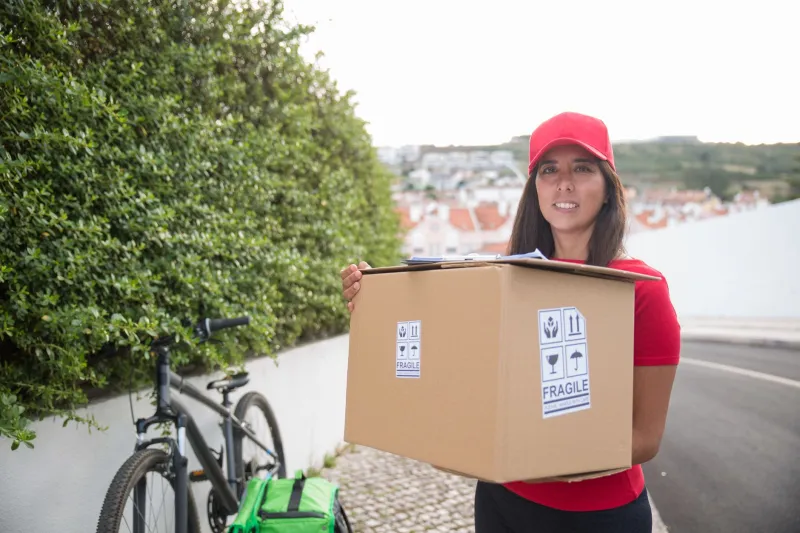
For years, the conventional wisdom held that same-day delivery was the exclusive domain of technology giants — a capability reserved for companies willing to spend tens of billions constructing automated fulfillment centers, proprietary routing algorithms, and fleets of branded delivery vehicles. The assumption was simple: if you could not match Amazon's infrastructure, you could not match Amazon's speed.
Across the East Coast, a growing number of independent retailers and regional distributors are dismantling that assumption, one delivered package at a time.
From the dense commercial corridors of Philadelphia and Baltimore to the smaller but tightly networked communities of coastal New Hampshire and coastal Georgia, regional businesses are capturing meaningful same-day delivery market share — not by mimicking the tech giants, but by exploiting advantages those giants fundamentally cannot replicate.
The Geography Dividend
The East Coast's defining commercial characteristic is density. Between Washington, D.C., and Boston alone, more than 50 million people live within a geographic corridor that, in many stretches, spans fewer than 100 miles from coast to inland edge. For a regional retailer or wholesale distributor, that concentration is not simply a market opportunity — it is a structural logistics advantage.
When a business maintains inventory within a city or a tight regional cluster, the physics of delivery change dramatically. A fulfillment run that might require a national carrier to route a package through a distant sorting hub and back can instead be accomplished in a single van trip covering 15 miles. The elimination of those intermediate steps — the handoffs, the sorting facilities, the cross-country freight legs — is where regional operators reclaim time that larger competitors cannot easily recover.
In practical terms, this means that a specialty grocer in Richmond, Virginia, or a regional seafood distributor operating out of Portland, Maine, can receive an order at 10:00 in the morning and place it on a customer's doorstep before dinner — not because of algorithmic sophistication, but because the warehouse and the customer are, quite simply, close to one another.
Local Logistics Partnerships: The Unsung Infrastructure
What regional retailers lack in proprietary delivery networks, many have compensated for through carefully cultivated partnerships with local logistics providers. Across the East Coast, a layer of independent courier services, regional freight specialists, and last-mile delivery networks has matured considerably over the past several years — in no small part because the pandemic forced businesses at every scale to reconsider their fulfillment dependencies.
These partnerships operate differently from the transactional relationships that national retailers maintain with major carriers. A regional distributor working with a local courier company is not simply purchasing capacity on a standardized rate card. It is entering into an ongoing operational relationship — one in which route familiarity, communication, and mutual accountability produce outcomes that a distant logistics platform cannot easily replicate.
The result is a fulfillment model that is, in many respects, more resilient than its large-scale counterparts. When a snowstorm disrupts delivery windows across the mid-Atlantic, a regional carrier with deep knowledge of local road conditions and a direct line to the retailer's operations team can adapt in real time in ways that a national carrier managing thousands of simultaneous routes simply cannot.
Customer Relationships as Competitive Infrastructure
Perhaps the most underappreciated element of the regional same-day advantage is the role of customer relationships. The businesses succeeding in this space are not merely faster than their larger competitors — they are, in many cases, more trusted.
A customer who has purchased specialty goods from a regional retailer for several years carries a different set of expectations than one browsing a national marketplace. They know the business, understand its inventory rhythms, and have often developed a direct line of communication with staff. That familiarity enables a degree of service personalization — a phone call to confirm a substitution, a text message with an accurate delivery window — that no algorithm has yet managed to replicate convincingly.
This relational capital also reduces friction at moments when fulfillment does not go perfectly. In the same-day delivery environment, where margins for error are narrow, the ability to communicate proactively and resolve issues with genuine accountability is a meaningful differentiator. Regional retailers are, structurally, better positioned to offer it.
Rethinking the Cost Equation
One persistent misconception about same-day delivery is that it demands enormous capital investment before it becomes viable. The East Coast experience suggests otherwise. Many of the regional businesses succeeding in this space have built their fulfillment capabilities incrementally — beginning with a handful of delivery zones, testing unit economics carefully, and expanding coverage as the model proved itself.
The investment profile looks quite different from the warehouse-automation playbook. Rather than committing capital to fixed infrastructure, regional operators tend to build variable cost structures: courier partnerships that scale with volume, delivery windows designed around existing inventory and staffing patterns, and customer-facing systems that are functional rather than elaborate.
This approach does not produce the theoretical throughput ceiling of a fully automated fulfillment center. What it does produce is a financially sustainable operation that can grow alongside the business and adapt as customer demand evolves — a meaningful advantage in a market where consumer expectations continue to shift.
What This Means for the Broader Regional Economy
The competitive success of East Coast regional retailers in same-day fulfillment carries implications that extend well beyond individual business performance. When local retailers capture delivery market share that might otherwise flow to national platforms, the economic benefits circulate within the regional economy: jobs at local courier companies, continued viability for independent retailers, and sustained demand for the regional producers and distributors who supply them.
For wholesale buyers and procurement professionals sourcing East Coast goods, the maturation of regional fulfillment capability also changes the calculus around lead times and inventory planning. A regional supplier capable of same-day or next-day delivery can, in practical terms, function as a near-zero-lead-time vendor — reducing the carrying costs associated with maintaining deep safety stock and enabling more responsive inventory management.
The Durable Edge
The technology giants are not standing still. Amazon continues to invest in last-mile infrastructure, and the resources available to national platforms remain vastly larger than anything a regional operator can marshal. The competitive window is not permanent.
What is durable, however, is the underlying geography. The East Coast's density, its established commercial relationships, and the deep community ties that regional businesses have cultivated over generations are not assets that can be acquired through a capital expenditure program. They are, in the truest sense, structural advantages — ones that patient, resourceful regional operators are only beginning to fully leverage.
For those willing to build thoughtfully and compete on their own terms, the last-mile advantage is very much still available.

