Cutting Out the Middleman: How Independent Retailers Are Going Straight to the Source on the East Coast
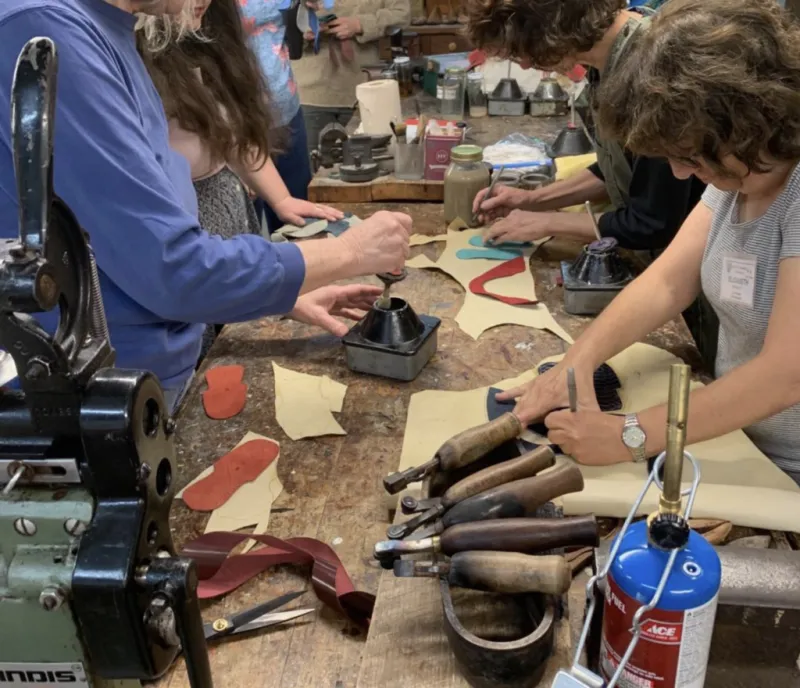
Photo: independent retailer meeting artisan producer at small workshop East Coast, via www.blogthetravel.com
For decades, the path from producer to shelf followed a predictable route: a maker delivered goods to a regional distributor, that distributor sold to a wholesaler, and the wholesaler eventually placed the product in a retail environment — each step extracting its share of margin along the way. That model served its purpose in an era when logistics were complicated and discovery was difficult. But a quiet rebellion is underway, and it is being led not by large-format chains or venture-backed platforms, but by independent retailers who have decided the old architecture no longer serves them.
Across the East Coast, from the specialty grocers of coastal Maine to the boutique home goods shops of the mid-Atlantic, buyers are picking up the phone — or making the drive — to connect directly with the people who actually make what they sell.
Why the Traditional Distribution Model Is Losing Ground
The conventional distribution channel was built for scale. It works exceptionally well when a producer needs to move thousands of units across dozens of states and has neither the infrastructure nor the bandwidth to manage individual retail accounts. But for the growing segment of independent retailers whose competitive advantage depends on differentiated, locally meaningful inventory, that same system becomes a liability.
Margin compression is the most immediate concern. By the time a product passes through two or three intermediaries, the retail price must climb considerably just to preserve a workable margin for everyone in the chain. For artisan goods — where production volumes are inherently limited and price sensitivity among consumers is real — that compression can render the economics unworkable.
Beyond the financial calculus, there is the matter of product knowledge. When a specialty food shop in Annapolis carries a line of small-batch hot sauces from a Virginia piedmont producer, the owner wants to be able to tell that story with authority. That kind of knowledge does not travel well through a distribution intermediary. It lives with the maker.
"We started visiting producers ourselves because our customers were asking questions we couldn't answer," said one specialty retailer based in coastal New Hampshire who sources directly from more than a dozen regional food producers. "Once we made that first trip to a farm, there was no going back. You can't unsee where something comes from."
The Financial Architecture of Direct Sourcing
For retailers willing to manage the additional administrative complexity, the financial benefits of direct sourcing are substantial. Eliminating one or two intermediary layers can reduce cost of goods by fifteen to thirty percent, depending on the product category and the original supply chain structure. That recovered margin can be deployed in several ways: passed partially to the consumer to drive volume, retained to improve store profitability, or reinvested in marketing that tells the product's origin story more compellingly.
Producers, for their part, benefit from higher per-unit revenue and from the kind of direct market feedback that distribution channels tend to filter out. When a retailer calls a cheesemaker in Vermont to report that a particular seasonal variety is moving exceptionally well, that information is actionable in a way that a quarterly distributor report rarely is.
The logistics, however, require attention. Minimum order quantities, shipping coordination, and invoicing must all be managed without the administrative infrastructure that a distributor provides. Retailers entering direct sourcing arrangements for the first time often underestimate this overhead. The solution, many have found, is to start with a small number of producers — two or three at most — and build systems before expanding the program.
Building Relationships That Outlast Individual Transactions
What distinguishes the most successful direct sourcing arrangements from simple transactional purchasing is the presence of genuine, ongoing relationships. Retailers who visit production facilities, attend regional trade events, and communicate regularly with their producer partners tend to receive preferential treatment during periods of limited supply. They are also more likely to be offered first access to new products before broader distribution is established.
For producers, these relationships provide something equally valuable: stability. A committed retail partner who orders consistently, pays on time, and actively promotes the product is worth considerably more than a distributor account that treats the goods as interchangeable with dozens of similar offerings.
"We prioritize our direct retail accounts when production is tight," noted one craft preserves producer based in the Hudson Valley who has built a network of approximately forty direct retail partners along the Eastern Seaboard. "These are people who believed in what we were doing before anyone else did. That counts for something."
The relational dimension also creates resilience. During supply disruptions — whether caused by seasonal variability, logistics challenges, or broader market volatility — direct relationships tend to weather difficulty better than distributor-mediated ones. Communication is faster, problem-solving is more collaborative, and both parties have stronger incentives to find workable solutions.
What This Trend Means for East Coast Wholesale Economics
The broader implications of this shift extend well beyond individual buyer-seller pairs. As direct sourcing becomes more common among independent retailers, regional distributors serving the East Coast are being forced to reckon with a changing value proposition. The ones that are adapting are doing so by moving upmarket — focusing on producers and retailers for whom the full-service logistics model genuinely adds value — while ceding the artisan and specialty segment to direct relationships.
This reorientation is creating a more segmented wholesale landscape, one in which the distribution channel a producer chooses signals something meaningful about their positioning and priorities. Makers who want national reach and high volume will continue to rely on established distribution networks. Those who want deeper retail relationships, higher per-unit margins, and greater control over how their brand is represented are increasingly choosing the direct path.
For retailers, the calculus is similarly clarifying. Carrying a product that twenty other stores in the region stock through the same distributor offers limited differentiation. Carrying a product sourced directly from a maker most of those stores have never heard of is a genuine competitive asset.
Practical Considerations for Retailers Exploring Direct Sourcing
For independent retailers considering this approach, a few principles have proven consistently useful among those who have navigated it successfully.
Start with producers you already know and respect. The relationship-building component of direct sourcing is not something that can be rushed, and beginning with a maker whose work you genuinely admire makes that investment of time and attention feel natural rather than obligatory.
Be transparent about your capacity. Producers working with direct retail accounts for the first time need accurate information about order frequency, volume expectations, and payment terms. Overpromising on any of these dimensions damages trust early and is difficult to recover from.
Invest in storytelling. The primary competitive advantage of carrying directly sourced regional goods is the story that accompanies them. Staff training, in-store signage, and digital content should all reflect the origin, craft, and people behind the products. That context is precisely what consumers cannot find at a big-box alternative.
The retailers who have embraced direct sourcing most fully describe it not as a procurement strategy but as a philosophy — one that happens to generate better margins and more interesting inventory. On the East Coast, where the density of skilled producers is exceptional and the distances between makers and markets are often quite short, that philosophy has particularly fertile ground to take root.