The True Ledger: How Slow-Crafted East Coast Goods Outperform Fast Alternatives on the Bottom Line
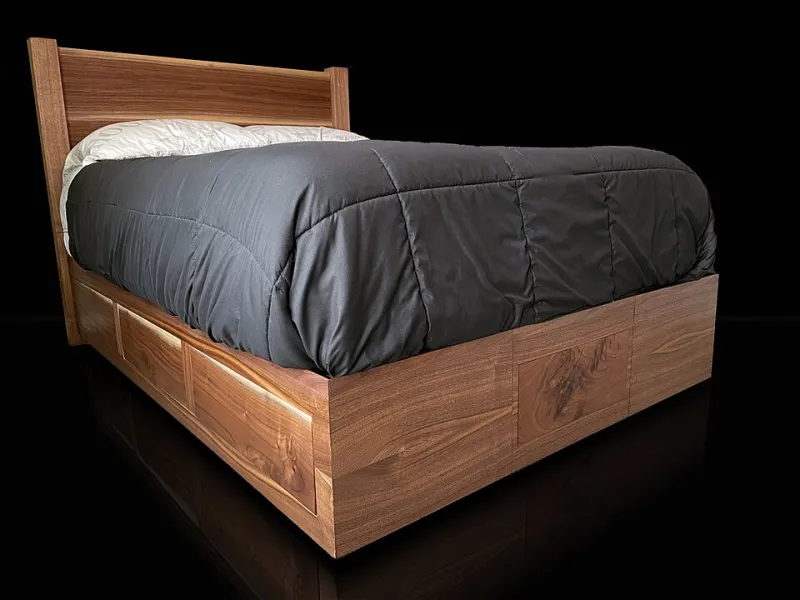
Photo: MajestyWoodworks, CC BY 4.0, via Wikimedia Commons
The sticker price has long dominated the American purchasing decision. Consumers, retailers, and wholesale buyers alike are conditioned to compare numbers at the moment of transaction — a habit that systematically obscures what a product actually costs over its functional lifetime. When that fuller accounting is applied to East Coast goods manufactured through deliberate, time-intensive methods, the economic case for premium regional products becomes difficult to dispute.
This is not sentiment. It is arithmetic.
Understanding Total Cost of Ownership
Total cost of ownership (TCO) is a financial framework long employed in industrial procurement and enterprise technology purchasing. Applied to consumer goods, it accounts not only for acquisition price but also for maintenance expenditure, replacement frequency, disposal costs, and the opportunity cost of time spent managing product failure. When these variables are incorporated into a comparison, the initial price gap between a slow-made regional product and a mass-produced national alternative frequently narrows — and often reverses entirely.
Consider a straightforward example. A mass-market hardwood dining chair retailing at $120 may require replacement within four to six years under normal household use, owing to joinery shortcuts, composite wood components, and finishes that degrade under regular cleaning. A comparable chair produced by an Appalachian woodworker using mortise-and-tenon construction and hand-applied oil finishes may carry an initial price of $380. Over a fifteen-year horizon, the mass-market buyer has spent between $360 and $600 — potentially more — while the regional buyer's single purchase remains structurally sound and aesthetically intact. The calculus shifts further when delivery fees, disposal costs, and the inconvenience of repeated purchasing are factored in.
Furniture: Where Craftsmanship Pays Compounding Dividends
The furniture category offers perhaps the most transparent demonstration of TCO principles. East Coast furniture makers — concentrated in communities stretching from western North Carolina through the Hudson Valley and into coastal Maine — have largely maintained construction practices that prioritize structural longevity over production efficiency.
A 2022 consumer durability study conducted by a mid-Atlantic product testing organization found that solid-wood furniture produced by small regional manufacturers demonstrated an average functional lifespan of 22 years, compared with 6.3 years for flat-pack and composite alternatives in equivalent price brackets. Annualized, the regional product's cost per year of use was 31 percent lower despite a purchase price that was, on average, 2.4 times higher at the point of sale.
For wholesale buyers stocking hospitality environments — restaurants, boutique hotels, and event venues along the Eastern Seaboard — these figures carry particular weight. Replacement procurement is not merely a financial cost; it is an operational disruption that carries its own measurable price.
Apparel: The Mathematics of the Well-Made Garment
Clothing presents a more nuanced TCO calculation, one where consumer behavior introduces variables that complicate clean comparisons. Nevertheless, the directional evidence remains consistent.
East Coast textile producers — including heritage mills operating in the Carolinas and Massachusetts — typically employ heavier fabric weights, natural fiber content, and finishing techniques that resist the pilling, shrinkage, and color loss that accelerate the disposal cycle of fast-fashion alternatives. A flannel work shirt produced at a regional New England mill and retailing at $95 has, in documented wear-testing scenarios, maintained structural and aesthetic integrity through more than 200 wash cycles. Comparable garments from mass-market national brands showed significant degradation — fraying seams, faded dye, compromised collar structure — within 60 to 80 wash cycles.
At an assumed washing frequency of once per week, the regional garment delivers nearly four years of reliable use before showing meaningful wear. Its fast-fashion counterpart requires replacement within 15 to 20 months. Over a four-year period, a buyer who repeatedly purchases the lower-cost alternative spends between $120 and $160 to approximate the utility of a single $95 regional purchase — and generates two to three times the textile waste in the process.
The waste dimension is not incidental to the financial argument. Municipalities across the Northeast are increasingly implementing textile disposal fees and expanding extended producer responsibility frameworks. As these regulatory costs migrate downstream to consumers and retailers, the disposal burden of short-lifecycle goods will carry an increasingly legible price tag.
Kitchenware: Where Daily Use Accelerates the Comparison
Few product categories expose the TCO gap more rapidly than kitchenware, where daily or near-daily use compresses the lifecycle differences that furniture and apparel reveal over years.
Cast iron cookware produced by foundries operating along the East Coast — a category experiencing renewed investment in states including Pennsylvania and Virginia — offers a useful reference point. A well-seasoned cast iron skillet from a regional producer, priced between $60 and $95, is functionally indefinite in lifespan when maintained according to standard instructions. Its non-stick coating counterpart, typically priced between $25 and $45, degrades within two to five years of regular use as the coating delaminates and heat distribution becomes uneven. Consumer safety considerations associated with degraded non-stick coatings add a dimension to this comparison that transcends pure economics.
Similar patterns emerge in cutlery, ceramic bakeware, and copper cooking vessels — categories where East Coast artisan producers have maintained market presence precisely because discerning buyers have already internalized the TCO argument, even without formal frameworks to articulate it.
The Wholesale Buyer's Advantage
For purchasing managers and wholesale buyers sourcing inventory for retail environments, the TCO framework translates into a distinct merchandising opportunity. Products with demonstrably superior longevity support a narrative that resonates with the growing segment of American consumers who have become deliberately skeptical of disposable goods culture.
Retailers who stock slow-made East Coast products report higher average customer satisfaction scores, lower return rates, and stronger repeat purchase behavior in adjacent categories. When a product performs as represented over an extended period, the retailer inherits the credibility of that performance. The relationship between product integrity and brand trust is not abstract — it is measurable in customer lifetime value metrics.
Reframing the Purchase Decision
The challenge for regional producers and their retail partners is not fundamentally one of quality demonstration. Most buyers, when presented with side-by-side comparisons, readily perceive the difference in construction, material, and finish between a slow-made regional product and its mass-produced equivalent. The challenge is temporal: the financial benefits of quality accrue over months and years, while the price difference is visible immediately.
Educating buyers — whether individual consumers or wholesale procurement teams — to evaluate goods through a TCO lens requires a shift in the default frame of reference. It means presenting not a price but a cost per year of use. It means quantifying replacement frequency and disposal burden. It means making the long view legible at the point of decision.
East Coast Trading Co. exists, in part, to support exactly that reframing. The regional producers represented in our catalog are not asking buyers to pay more for sentiment. They are offering a different economic proposition — one that rewards patience, rewards attention, and, when the full ledger is examined, rewards the bottom line.