Dockside Dividends: How Small American Manufacturers Are Turning East Coast Port Access Into a Production Edge
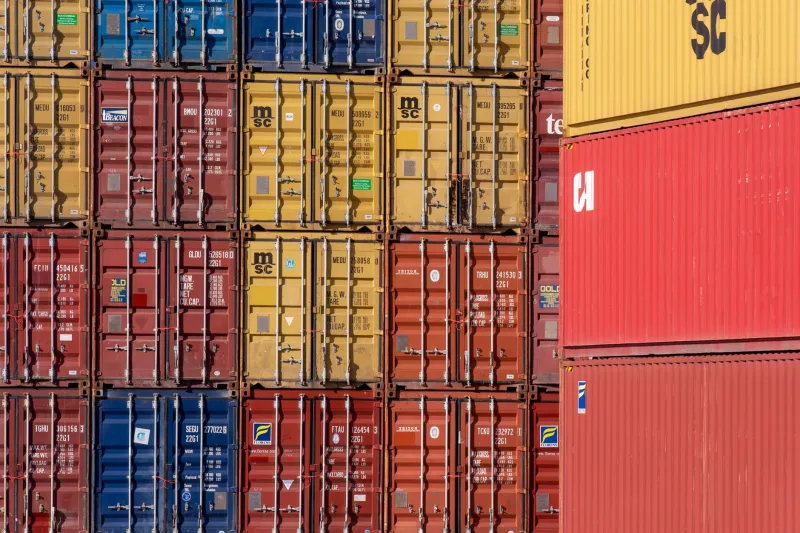
For decades, the conversation around East Coast ports centered almost exclusively on the volume of finished goods flowing inward from overseas. Container ships arriving at Baltimore, Savannah, Newark, and Boston were understood primarily as conduits for imported consumer products destined for warehouse shelves. What that narrative consistently overlooked was the other side of the ledger: the raw materials, components, and industrial inputs that arrive at those same docks and feed directly into American manufacturing operations — particularly smaller ones.
In recent years, a growing number of small and mid-sized domestic producers have begun treating East Coast port infrastructure not as a backdrop to commerce but as a core strategic resource. The results are reshaping how regional manufacturing competes, and how premium American-made goods are produced at price points that would have seemed difficult to achieve even a decade ago.
The Input Equation: Why Raw Materials Matter as Much as Finished Goods
American manufacturing competitiveness is often framed as a labor cost problem. That framing, while not entirely wrong, misses a significant variable: input costs. The price a manufacturer pays for raw materials — whether Portuguese cork, Italian marble, South American hardwoods, or specialty metals from Southeast Asia — has an enormous effect on the final cost structure of a domestically produced good.
For manufacturers located within close proximity to major East Coast import terminals, those input costs can be meaningfully lower than for competitors situated in the interior of the country. The reason is straightforward: every mile a raw material travels after clearing customs adds cost. A furniture maker in coastal Virginia sourcing Brazilian hardwoods through the Port of Baltimore faces a fundamentally different freight equation than a counterpart operating out of Kansas City.
This differential compounds. Faster transit times from port to production floor mean lower carrying costs, reduced warehousing needs, and the ability to order in smaller, more responsive quantities rather than bulk-buying to offset long inland shipping legs. For small manufacturers operating on tighter margins, that flexibility is not a minor convenience — it is a structural advantage.
Customs Proximity and the Speed of Clearance
Beyond raw freight economics, East Coast manufacturers benefit from a less-discussed advantage: operational familiarity with port customs processes. Companies that regularly source materials through the same terminals develop relationships with customs brokers, freight forwarders, and port agents who understand their specific commodity categories and compliance requirements.
This familiarity translates into faster clearance times. A small ceramics producer in coastal New Jersey importing specialty kaolin clay from the United Kingdom, for example, may clear a shipment through the Port of Newark in a fraction of the time that an equivalent operation in the Midwest would require — not because the regulations differ, but because the relationships, proximity, and logistical infrastructure are already in place.
The Port of Savannah, now one of the largest and most efficient container terminals on the Eastern Seaboard, has invested heavily in chassis availability, on-dock rail connections, and expanded gate hours — all of which reduce dwell time for incoming cargo. Small manufacturers in Georgia and the Carolinas have been among the primary beneficiaries, gaining access to the kind of throughput efficiency once reserved for large importers with dedicated logistics teams.
Case in Point: Textile Producers Rewriting the Sourcing Playbook
The American textile industry offers one of the clearest illustrations of this dynamic. A cluster of small-batch fabric and apparel manufacturers operating across North Carolina and Virginia has quietly rebuilt production models around imported specialty fibers — Japanese selvedge denim, Italian wool, Peruvian pima cotton — sourced through East Coast terminals and finished domestically into premium goods.
These producers are not competing with fast fashion. They are targeting a different buyer entirely: one willing to pay for documented provenance, domestic labor, and quality that holds up over years rather than seasons. The imported raw material is a feature, not a concession. And the ability to source that material efficiently through nearby ports is what makes the economics viable at small-batch scale.
One North Carolina shirtmaker, operating with fewer than two dozen employees, sources its base fabrics through the Port of Wilmington and turns orders around in weeks rather than months. That cycle time — impossible to replicate for a manufacturer dependent on a longer, more complex supply chain — has become a central selling point for wholesale buyers who need responsiveness as much as quality.
Strategic Partnerships Along the Dockside Corridor
Small manufacturers rarely navigate port logistics alone. A network of regional intermediaries — specialty importers, raw material distributors, and third-party logistics providers — has grown up around East Coast terminals specifically to serve domestic producers who lack the volume to manage direct import relationships.
These intermediaries function as force multipliers. A specialty importer operating out of the Baltimore or Philadelphia area may consolidate shipments of Italian stone, distribute to a dozen regional fabricators, and handle all customs documentation centrally. Each of those fabricators benefits from import-scale purchasing power without the overhead of maintaining an international procurement operation.
For East Coast Trading Co., these supply networks represent exactly the kind of layered regional commerce that distinguishes coastal production ecosystems from more isolated manufacturing environments. The density of ports, distributors, brokers, and producers along the Eastern Seaboard creates a self-reinforcing infrastructure that is genuinely difficult to replicate elsewhere.
The Premium Product Argument
Skeptics sometimes question whether the use of imported inputs compromises the integrity of an "American-made" designation. The question is worth engaging directly. Under Federal Trade Commission guidelines, a product may be marketed as made in the USA when it is "all or virtually all" manufactured domestically — a standard that accommodates imported raw materials provided the substantive production occurs on American soil.
More to the point, the sourcing of specialty inputs from overseas has a long and legitimate history in American craft manufacturing. Vermont cheesemakers have long used cultures developed in European traditions. New England boat builders have sourced teak and mahogany from international markets for generations. The distinction between a premium domestic product and an imported one lies in where the knowledge, labor, and finishing occur — not in whether every input was grown or extracted within US borders.
What East Coast port access enables is the sourcing of those inputs with a speed and cost efficiency that keeps the finished product competitive without sacrificing the domestic production values that justify a premium price.
Looking Forward: Port Expansion and the Manufacturing Opportunity
Several major East Coast terminals are currently undergoing or planning significant capacity expansions. The Port of Virginia has invested in crane upgrades and terminal automation. Savannah continues to extend its footprint. Baltimore has deepened its main channel to accommodate larger vessels. These investments are typically framed in terms of import volume — but their downstream effect on regional manufacturing supply chains deserves equal attention.
As throughput increases and dwell times decrease, the logistical advantages currently enjoyed by manufacturers in close proximity to these ports will only grow. The infrastructure being built today is laying the groundwork for a regional manufacturing renaissance that is already underway in pockets up and down the Eastern Seaboard.
For small producers paying attention, the message is clear: the port is not just where goods arrive. For those who know how to use it, it is where competitive advantage begins.