Proximity as Power: How East Coast Regional Brands Hold Their Ground When Demand Peaks
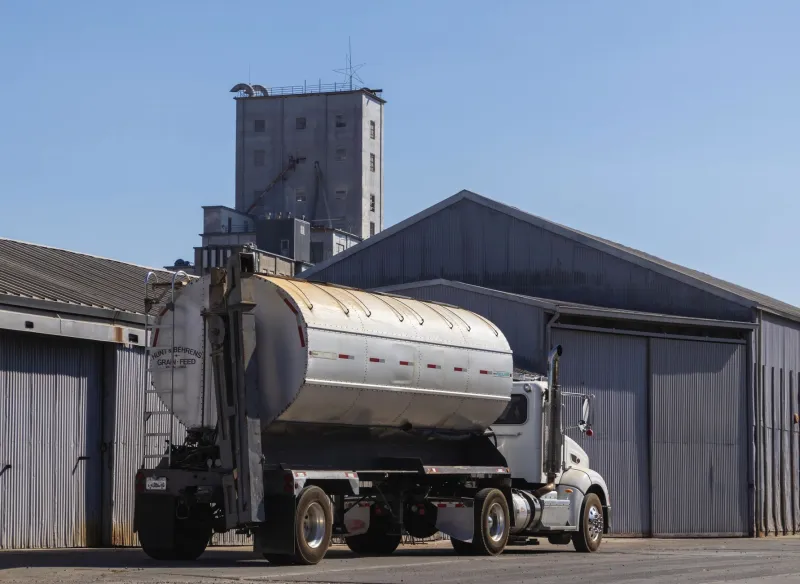
Every autumn, as leaves turn along the Atlantic seaboard and holiday shopping calendars begin to fill, a quiet but consequential competition unfolds across American retail. National distributors activate contingency protocols, reroute container shipments, and absorb the inevitable delays that come with moving goods across thousands of miles of interstate highway and rail. Meanwhile, a maple syrup producer in Vermont is loading a delivery truck bound for a specialty grocer in Hartford. A crab processor on Maryland's Eastern Shore is packing fresh orders destined for Philadelphia restaurants preparing their Thanksgiving menus. A small-batch jam maker in the Hudson Valley is fulfilling a wholesale order that arrived yesterday morning.
The contrast is not incidental. It is structural — and for East Coast regional brands, it represents one of the most reliable competitive advantages available in a marketplace that otherwise favors scale.
The Logistics Gap That Scale Cannot Close
To understand why regional producers consistently outperform national distributors during peak seasons, it helps to examine what large-scale logistics actually requires. A national brand sourcing goods from a manufacturing facility in the Midwest or importing from overseas must account for warehouse transit times, cross-country freight schedules, port congestion, and the compounding delays that emerge when every link in a long chain experiences even modest stress.
"The longer the supply chain, the more points of failure you introduce," explains one East Coast-based logistics consultant who works with both regional producers and mid-size national distributors. "During normal operating conditions, those vulnerabilities are manageable. But during a holiday rush, when carrier capacity tightens and consumer expectations are at their highest, the margin for error collapses almost entirely."
East Coast regional brands, by contrast, operate within a comparatively compact geographic corridor. The distance from a producer in coastal Maine to a distribution hub in Boston is measured in hours, not days. A specialty food company in the Chesapeake region can reach the dense consumer markets of Washington, D.C., Baltimore, and Philadelphia within a single delivery cycle. When a retailer in New York City needs to restock before a weekend rush, a regional supplier can often respond in a timeframe that a cross-country distributor simply cannot match.
Inventory Agility and the Value of Local Knowledge
Beyond raw delivery speed, regional producers benefit from a more nuanced advantage: they tend to understand their markets with a granularity that national players rarely achieve.
A fourth-generation seafood distributor based in Gloucester, Massachusetts, described how this local knowledge shapes his operation during the holiday season. "I know which accounts are going to double their orders the week before Christmas. I know which ones run lean on inventory and which ones like to carry buffer stock. That relationship history lets me pre-position product in a way that keeps everyone supplied without overextending my own capacity."
This kind of relational intelligence is difficult to systematize at national scale. Large distributors rely on algorithmic demand forecasting, which performs reasonably well under stable conditions but can misread regional consumer behavior during culturally specific peak periods — the Thanksgiving seafood traditions of New England, for instance, or the particular holiday gift-giving patterns that drive demand for artisanal preserves and charcuterie along the Mid-Atlantic corridor.
Regional producers, embedded in these communities, anticipate those patterns instinctively. The result is inventory management that feels responsive rather than reactive — a meaningful distinction when shelf availability during peak weeks can determine whether a retailer reorders from the same supplier next season.
Freshness as a Differentiator
For producers in the food and beverage category — a significant portion of East Coast Trading Co.'s regional catalog — the competitive advantage of a shorter supply chain extends beyond logistics into product quality itself.
Freshness is not merely a marketing claim when a product travels two hundred miles rather than two thousand. Cold chain integrity is easier to maintain across shorter distances. Transit time directly affects the shelf life available to a retailer upon receipt. And for certain categories — fresh seafood, dairy, fermented goods, and seasonal produce — the difference between a three-day transit and a three-week journey is the difference between a premium product and a compromised one.
"Consumers are becoming more educated about this," notes one specialty food buyer for a regional grocery chain in New England. "They're asking where things come from, and they're noticing when a product arrives at peak quality versus when it's already been in transit for two weeks. Regional sourcing isn't just a feel-good story for us — it's a quality argument we can make with confidence."
That quality argument, consistently delivered through peak season after peak season, compounds into something more durable than a single transaction: customer loyalty anchored in reliable experience.
The Resilience Dividend
The disruptions of recent years — pandemic-related port congestion, freight carrier shortages, extreme weather events affecting interstate corridors — brought the vulnerabilities of extended supply chains into sharp public focus. Many retailers who had depended exclusively on national or international distributors found themselves unable to fulfill customer demand during the periods when that demand was highest.
Regional producers, whose supply chains had fewer intercontinental dependencies, fared comparatively well. Several East Coast food producers reported that the 2020 and 2021 holiday seasons, despite their broader disruptions, represented some of their strongest wholesale performance on record — in part because buyers who had been burned by national distributor failures were actively seeking more reliable alternatives.
This shift in procurement thinking has not fully reversed. Buyers who discovered regional supply partners during periods of national disruption have, in many cases, maintained and expanded those relationships. The resilience dividend — the additional value attributed to a supplier who can be counted on when conditions are difficult — has become a recognized factor in wholesale purchasing decisions across the East Coast retail landscape.
What This Means for Buyers and Retailers
For retailers, purchasing managers, and consumers navigating the crowded marketplace of peak-season demand, the operational realities described here carry practical implications.
Sourcing from regional producers is not simply an act of regional solidarity or ethical consumption, though both of those motivations have their merit. It is, increasingly, a sound logistical strategy. Shorter lead times, more reliable fulfillment, superior product freshness, and the kind of relationship-driven service that allows for responsive problem-solving — these are measurable advantages that translate directly into business outcomes.
East Coast Trading Co. exists, in part, to make those advantages accessible. By connecting buyers with the regional producers who have built their businesses on proximity, craft, and local knowledge, we help bridge the gap between the producer's competitive strength and the buyer's operational needs.
As peak seasons approach and supply chain pressures mount once again, that bridge becomes not merely convenient, but essential.