Stocking Smarter: How East Coast Wholesalers Are Turning Lean Inventory Into a Competitive Weapon
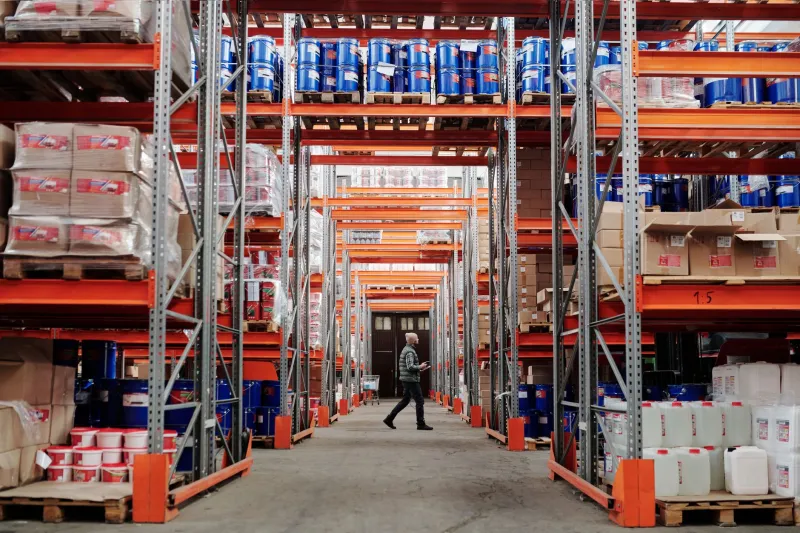
Conventional wholesale wisdom has long held that more inventory equals more security. Pack the shelves, buffer against disruption, and keep buyers confident that supply will never run short. For decades, national distributors built their reputations — and their balance sheets — on the premise that volume storage was the backbone of reliability.
East Coast regional distributors are quietly dismantling that assumption.
Across the corridor stretching from Maine to Georgia, a measurable shift is underway. Wholesalers who once competed on warehouse square footage are now competing on restocking velocity. Rather than holding six weeks of product on the floor, they are holding six days' worth — and replenishing faster than their national counterparts can process a purchase order. The result is a leaner, more responsive distribution model that is winning contracts from B2B buyers who have grown weary of managing overstock on their own end.
The Geography Advantage Hiding in Plain Sight
The East Coast's most undervalued commercial asset is not its ports, its labor pool, or even its dense consumer markets — though all of those matter. It is the compressed distance between supplier, distributor, and end buyer.
In practical terms, a regional wholesaler operating out of, say, the Baltimore-to-Philadelphia corridor may sit within a four-hour drive of a dozen domestic producers, two major container ports, and hundreds of retail or foodservice accounts. That geographic compression makes just-in-time replenishment not merely feasible but logistically straightforward in a way it simply cannot be for a Midwest distribution hub relying on long-haul freight from either coast.
When restocking a product line takes 48 hours rather than 10 days, the calculus on safety stock changes entirely. The cushion that national distributors must build into their inventory models — the weeks of buffer stock designed to absorb shipping delays, customs holdups, or freight bottlenecks — becomes unnecessary overhead for an East Coast operator with a supplier 90 miles up the road.
What Carrying Costs Actually Cost
For B2B buyers, the conversation about inventory often centers on availability. But for distributors, the more pressing conversation is about capital efficiency. Inventory sitting on a warehouse shelf is not neutral — it is actively consuming resources.
Carrying costs, which typically encompass storage fees, insurance, spoilage or obsolescence risk, and the opportunity cost of tied-up working capital, can represent anywhere from 20 to 30 percent of a product's total inventory value annually. For a distributor holding $2 million in stock, that figure translates to $400,000 to $600,000 in annual carrying burden — before a single unit is sold.
Lean-inventory operators on the East Coast are attacking that burden directly. By reducing on-hand stock and relying instead on frequent, shorter replenishment cycles, they are freeing capital that would otherwise sit inert on warehouse shelves. That freed capital can be redirected toward better supplier terms, expanded product lines, or competitive pricing — all of which benefit the B2B buyers on the other end of the transaction.
The Supplier Relationship as Infrastructure
None of this functions without one critical prerequisite: a supplier network capable of responding quickly and consistently. This is where East Coast distributors hold a structural advantage that is difficult for national competitors to replicate.
Regional producers — whether craft food manufacturers in the Hudson Valley, specialty goods makers along the Carolina Piedmont, or marine-sourced suppliers in New England — tend to operate at scales that allow for more nimble order fulfillment. They are not managing global production pipelines or coordinating across multiple continents. A call placed on a Monday morning can, in many cases, result in a delivery by Wednesday afternoon.
Distributors who have cultivated deep relationships with these producers gain something beyond favorable pricing: they gain scheduling priority. When a regional cheesemaker or a small-batch beverage producer faces a capacity constraint, the buyer who calls every two weeks is treated differently than the one who places a quarterly order. Lean-inventory distribution, in this sense, is not purely a logistics strategy — it is a relationship strategy.
How B2B Buyers Benefit Directly
For the retail shops, foodservice operators, and specialty chains that source through regional distributors, the lean-inventory model carries tangible benefits that extend well beyond the distributor's own margin improvements.
First, product freshness improves. A distributor turning over inventory every week is moving fresher product than one cycling stock every month. For perishable or time-sensitive goods — a significant portion of the East Coast's regional offerings — this is not a minor consideration. It is a direct quality differentiator.
Second, catalog relevance increases. Distributors who are not locked into oversized positions on slow-moving SKUs have the flexibility to rotate product offerings more responsively. Seasonal items can be introduced and retired on actual market timing rather than inventory-clearance timing. Buyers gain access to a more current, curated selection.
Third, minimum order requirements often decrease. When a distributor does not need to justify large purchase minimums to offset carrying costs, smaller buyers — independent retailers, boutique restaurants, regional grocers — gain access to wholesale pricing tiers that were previously reserved for high-volume accounts.
The Counterintuitive Risk Profile
Skeptics of lean-inventory distribution raise a legitimate concern: what happens when a supplier faces an unexpected disruption? Without buffer stock, a production delay could translate directly into a fulfillment gap.
East Coast distributors operating this model tend to address that risk through supplier diversification rather than inventory accumulation. Rather than holding eight weeks of product from a single source, they maintain active relationships with two or three regional producers capable of supplying similar goods. If one supplier encounters a short-term constraint, a substitute can be activated quickly — often without the buyer ever noticing a disruption.
This approach spreads risk horizontally across the supply network rather than vertically through warehouse depth. It also strengthens the regional production ecosystem by distributing order volume across multiple producers rather than concentrating it with a single dominant supplier.
A Model Built for the Current Moment
The past several years have offered a pointed lesson about the dangers of excess inventory. Supply chain disruptions exposed the fragility of models built on bulk storage and long replenishment cycles. Distributors who had over-committed to large inventory positions found themselves managing obsolescence, cash flow strain, and buyer frustration simultaneously.
The lean-inventory operators who had already restructured around proximity and velocity fared considerably better. Their smaller on-hand positions meant less exposure when markets shifted. Their close supplier relationships meant faster pivots when product categories softened or surged.
For B2B buyers evaluating their sourcing partnerships, that track record matters. A distributor who can demonstrate consistent availability without the overhead of warehouse-scale stockpiling is offering something genuinely valuable: reliability built on agility rather than accumulation.
On the East Coast, that combination of geographic advantage, supplier proximity, and operational discipline is proving to be a durable formula — one that is redefining what a high-performance distribution partnership looks like in the modern wholesale landscape.