Beyond the Invoice: The Metrics That Make Regional Suppliers the Rational Choice for East Coast B2B Buyers

There is a persistent assumption in procurement circles that loyalty to regional suppliers is, at its core, an emotional decision—a preference for the familiar dressed up in business language. That assumption does not survive contact with the numbers.
When East Coast B2B buyers consistently return to local and regional sources, the pattern reflects something more durable than goodwill. It reflects a calculation, often intuitive but increasingly documented, that regional suppliers deliver measurable value across dimensions that standard purchase-order analysis routinely ignores. Understanding those dimensions is not merely useful for buyers evaluating their next sourcing decision. It is essential for any distributor or manufacturer seeking to articulate why regional relationships deserve a place at the table.
The Limits of the Line-Item View
Conventional procurement analysis begins and ends with the invoice price. A buyer compares cost per unit across several vendors, adjusts for freight, and selects the lowest figure. This method is not without merit, but it captures only a fraction of what a supplier relationship actually costs—or saves.
Total cost of ownership (TCO) is a more complete framework. It accounts for acquisition price, yes, but also for inventory carrying costs, order lead times, defect and return rates, administrative burden, and the cost of supply disruptions. When TCO analysis is applied rigorously, regional suppliers frequently close the apparent gap with lower-cost distant alternatives—and often move ahead of them.
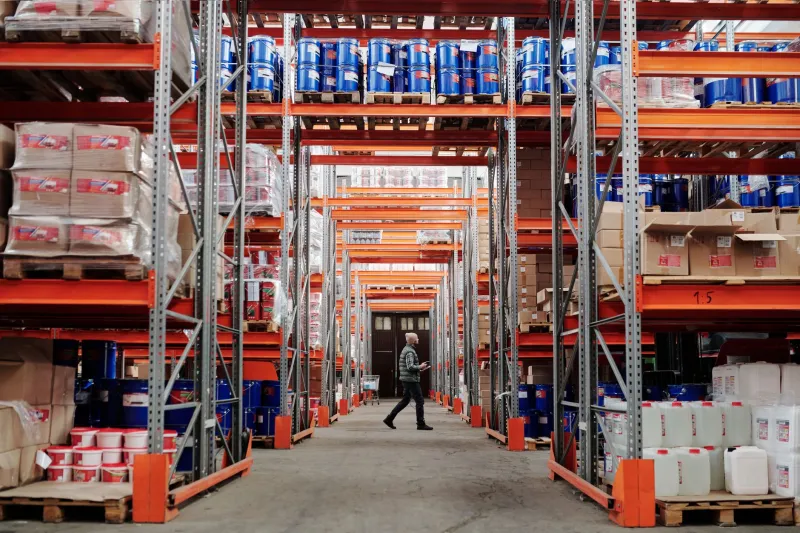
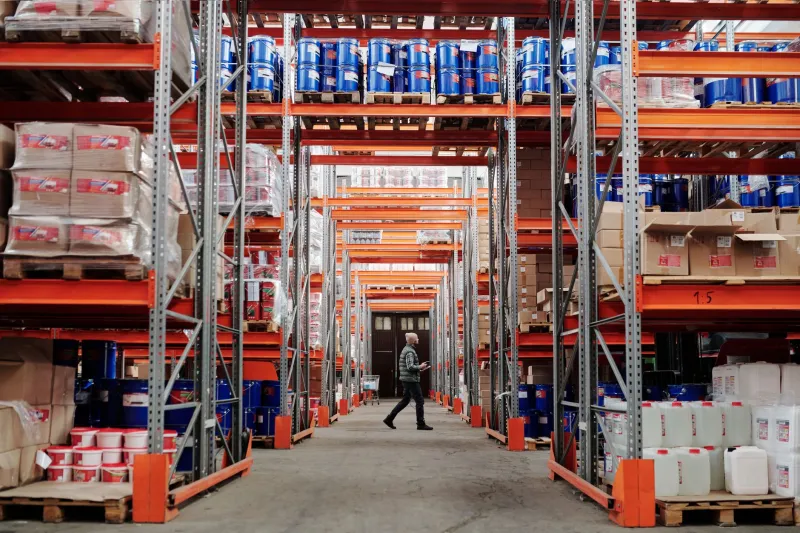
Consider a mid-sized food-service distributor operating out of Baltimore. On a per-unit basis, a regional condiment producer in the Chesapeake corridor may price five to eight percent above a national brand fulfilling from a Midwest warehouse. But when that distributor accounts for the shorter replenishment cycle, the lower minimum order quantities, and the near-elimination of transit damage claims, the TCO differential narrows considerably. Add in the reduced need for safety stock—capital that would otherwise sit idle on a warehouse shelf—and the regional supplier frequently comes out ahead.
Relationship Stability as a Financial Asset
One of the least-quantified variables in supplier evaluation is relationship tenure. Long-standing partnerships with regional suppliers carry compounding value that does not appear on any single invoice but manifests consistently in operational performance.
Suppliers who have worked with a buyer for several years develop an understanding of that buyer's inventory rhythms, quality standards, and communication preferences. The result is a reduction in friction at every stage of the transaction cycle—fewer errors, faster resolution of exceptions, and a shared institutional knowledge that accelerates problem-solving. This operational fluency has a real dollar value, even if most accounting systems are not structured to measure it.
There is also the matter of preferential treatment during periods of constrained supply. When a regional producer in coastal New England faces a limited harvest or a temporary capacity ceiling, their longest-standing wholesale accounts are typically the last to experience allocation cuts. That kind of informal priority is not written into a contract, but it is a genuine hedge against supply disruption—one that buyers who have invested in relationship depth tend to rely upon without fully crediting it in their sourcing models.
Customization Flexibility and the Cost of Rigidity
National and international suppliers generally operate on standardized SKUs, fixed packaging configurations, and production runs calibrated for high-volume clients. For buyers whose needs align with those standards, the arrangement is efficient. For buyers whose market demands something more specific, it is a persistent constraint.
Regional suppliers on the East Coast tend to operate with greater configurability. A specialty grocery chain in the mid-Atlantic region, for instance, may require private-label packaging for a locally sourced jam or a modified case count to fit a particular display format. A New England cannery or a Virginia-based artisan food producer is far more likely to accommodate those requirements than a national co-packer whose minimum order thresholds make small-batch customization economically impractical.
This flexibility carries direct financial value. It reduces unsold inventory by aligning pack sizes with actual sell-through rates. It enables differentiated retail offerings that command higher margin. And it allows buyers to respond to shifting consumer preferences without waiting for a national supplier to update its production calendar—a process that can take quarters rather than weeks.
Risk Mitigation Beyond the Obvious
The conversation around supply chain risk has grown considerably more sophisticated since the disruptions of the early 2020s. Buyers now understand, with greater clarity than before, that geographic concentration in supplier networks creates fragility. But the risk calculus for regional sourcing extends beyond the headline concern of port closures or cross-continental logistics failures.
Regional suppliers face a different risk profile. They are subject to the same local weather events and regulatory environments as their buyers, which creates a shared exposure—but it also creates shared situational awareness. When a buyer and supplier operate in the same regional ecosystem, both parties have early visibility into emerging disruptions and can coordinate responses more quickly than a remote supplier receiving the same news from a distance.
Furthermore, the financial health of regional suppliers tends to be more transparent to their local partners. A buyer who has visited a supplier's facility, met their management team, and tracked their growth over time has better information about supplier stability than one who relies solely on annual vendor reviews and credit reports. That informational advantage reduces the risk of sudden supplier failure—a scenario that carries significant operational and financial cost when it occurs without warning.
The Compounding Logic of Regional Commitment
What emerges from a careful review of these metrics is not a sentimental argument for buying local. It is a structural argument for recognizing that the value delivered by East Coast regional suppliers accumulates in ways that line-item procurement models were not designed to capture.
Total cost of ownership analysis, properly applied, consistently narrows the apparent price advantage of distant alternatives. Relationship tenure generates operational efficiency that compounds over time. Customization flexibility enables margin preservation and inventory optimization. And the risk mitigation properties of regional sourcing—particularly the informational advantages that come from geographic proximity—provide a form of supply chain insurance that rarely appears as a line item but is recognized immediately when it is absent.
For B2B buyers on the East Coast evaluating their supplier portfolios, the relevant question is not whether regional sourcing feels right. It is whether the full accounting has been done. In most cases, when it has, the regional supplier earns its place not through sentiment but through performance.
At East Coast Trading Co., our platform is built on precisely this premise—that the goods and relationships we connect buyers with carry value that extends well beyond the first transaction. The math, when it is done completely, tends to agree.