Navigating the New Shipping Reality: How East Coast Ports Are Rewriting Regional Distribution
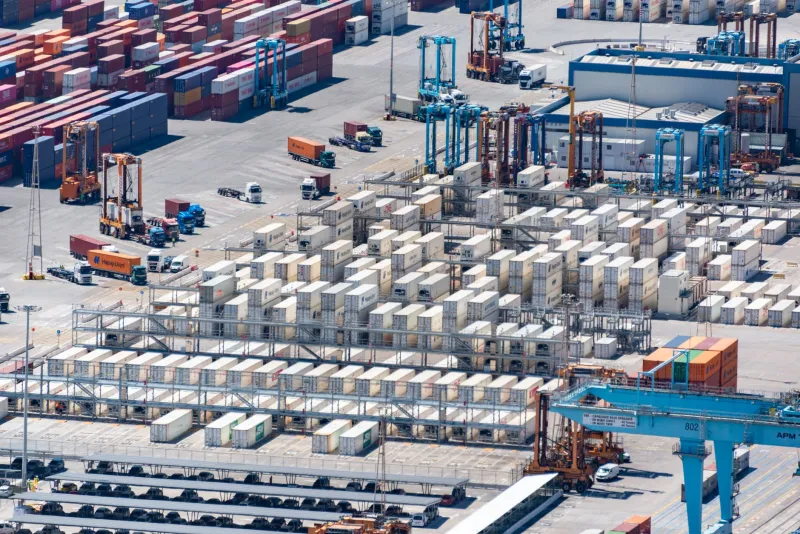
For decades, the conversation about American port infrastructure has been dominated by the West Coast. The ports of Los Angeles and Long Beach commanded the headlines, the federal investment dollars, and the bulk of the nation's import volume. But the calculus has been shifting — quietly at first, then with unmistakable momentum. East Coast ports, from Savannah to Baltimore to New York-New Jersey, are no longer secondary players. They are, increasingly, the front line of a national logistics reckoning.
For regional distributors and small manufacturers whose livelihoods depend on moving goods efficiently, this shift carries profound implications — both as a source of disruption and, for those paying close attention, as a genuine competitive opening.
The Container Crunch: A Problem That Didn't Affect Everyone Equally
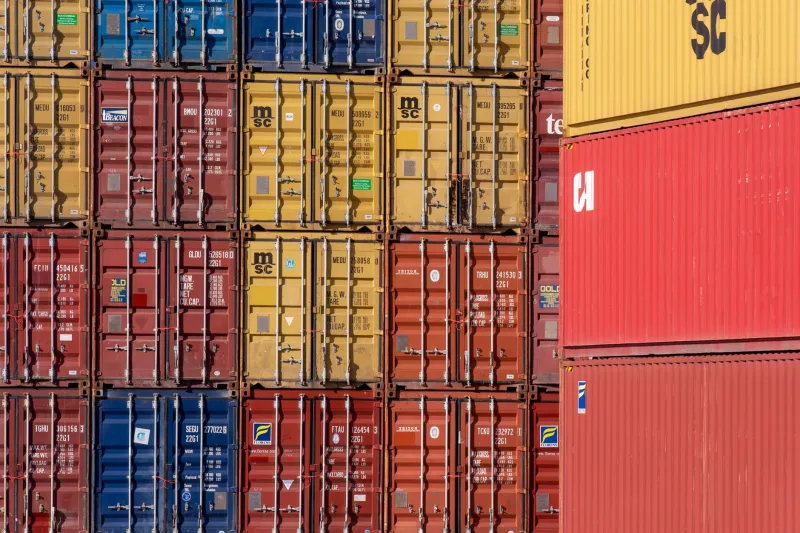
The global container shortage that emerged in the wake of pandemic-era trade disruptions exposed a structural vulnerability that many in the industry already suspected but rarely discussed openly: container availability is not distributed evenly, and the imbalances tend to punish smaller operators most severely.
Large importers with established relationships and long-term freight contracts were better positioned to secure equipment when supply tightened. Regional manufacturers and mid-size distributors — particularly those operating along the East Coast with smaller order volumes and less leverage over carriers — found themselves competing for a shrinking pool of containers at dramatically elevated rates.
The effect was compounded by the geographic realities of East Coast shipping. Unlike West Coast ports, which benefit from direct transpacific routes serving the highest-volume trade lanes, many East Coast facilities handle goods that have already transited through multiple legs of a global supply chain. By the time a container reaches Charleston or Philadelphia, it may have passed through Panama or Suez, accumulated delays, and arrived with documentation complexities that add friction to the final distribution process.
For producers of East Coast regional goods — whether a specialty food manufacturer in the Hudson Valley or a textile operation in the Carolinas — these dynamics translate directly into cost pressure and planning uncertainty.
Port Congestion and the Ripple Effect on Regional Supply Chains
Congestion at major East Coast terminals does not stay contained within port boundaries. Its effects ripple outward through trucking networks, rail connections, and warehouse capacity in ways that are difficult to anticipate and costly to absorb.
When vessels queue outside New York-New Jersey or Savannah — both of which have experienced significant congestion in recent years as their volumes have grown — dwell times increase, chassis become scarce, and the trucking capacity needed to clear containers gets absorbed into the bottleneck. The result is a cascading shortage of resources that extends well into the regional distribution network.
For East Coast businesses that rely on inbound components or raw materials, this creates a planning paradox. Longer lead times demand earlier ordering, but earlier ordering requires capital commitments that smaller operators may not be able to sustain. The margin for error narrows precisely when market conditions are most volatile.
Yet this same congestion problem has produced an unexpected consequence: it has accelerated investment in secondary East Coast port facilities. Ports like Wilmington, Delaware, and Portsmouth, Virginia, have attracted renewed attention from shippers seeking alternatives to overtaxed primary terminals. For regional distributors with the flexibility to adapt their receiving logistics, these alternatives represent a meaningful hedge against disruption.
The Strategic Response: Diversification as a Discipline
The East Coast businesses that have navigated recent logistics turbulence most successfully share a common characteristic: they treated distribution network diversification not as a contingency measure but as an ongoing operational discipline.
Rather than routing all inbound and outbound freight through a single port or carrier relationship, resilient operators have built portfolios of logistics options. This means maintaining relationships with multiple freight forwarders, establishing contracts with regional trucking companies across different corridors, and — where feasible — utilizing intermodal rail connections that can bypass congested port zones entirely.
The geography of the East Coast actually supports this approach in ways that West Coast operators may envy. The concentration of population centers along the I-95 corridor means that a distributor based in, say, central New Jersey can realistically draw on port capacity from multiple facilities within a few hours' drive. Savannah's growth as a mega-port has also created new routing options for businesses in the Southeast and Mid-Atlantic that previously had fewer alternatives.
Some distributors have gone further, investing in bonded warehouse capacity near port facilities to give themselves greater flexibility in timing container releases. By holding goods in customs-bonded storage rather than clearing them immediately, operators can smooth the flow of inventory into their distribution networks and avoid the premium costs associated with peak-demand trucking windows.
Timing the Market: When to Move and When to Wait
Perhaps the most sophisticated adaptation emerging among East Coast regional operators is a more deliberate approach to freight timing — treating the shipping calendar with the same analytical rigor typically reserved for inventory management or pricing strategy.
Seasonal freight patterns on the East Coast are well-documented. The pre-holiday surge, the post-Chinese New Year rebalancing, and the summer produce shipping peak all create predictable windows of elevated congestion and cost. Businesses that plan their procurement and distribution cycles around these patterns — moving goods earlier in low-demand windows, holding inventory domestically rather than paying premium freight rates — are finding measurable cost advantages over competitors who treat shipping as a fixed overhead rather than a variable they can influence.
This kind of strategic timing requires sophisticated demand forecasting and a willingness to carry more domestic inventory than a pure just-in-time model would suggest. But for East Coast producers and distributors whose goods command a regional premium, the economics increasingly support that investment.
A Structural Advantage in the Making
The long-term trajectory of East Coast port development points toward continued investment and capacity expansion. The deepening of Savannah's harbor, the ongoing modernization of Baltimore's Seagirt Marine Terminal, and the ambitious expansion plans at the Port of Virginia all signal that the infrastructure gap between East and West Coast facilities is narrowing.
For regional businesses that have spent the past several years building adaptive logistics capabilities in response to disruption, this infrastructure investment arrives as a force multiplier. The operators who learned to navigate container shortages and port congestion with creativity and discipline are precisely the ones positioned to capture the efficiency gains that improved facilities will deliver.
In a marketplace where supply chain reliability has become a genuine differentiator — not just an operational footnote — the East Coast businesses that treated logistics adversity as a strategic education are emerging with capabilities their competitors will find difficult to replicate quickly.
The container problem, as it turns out, may have been one of the more instructive challenges regional distribution has faced in a generation.