Deliberate Restraint: How Staying Small Became the East Coast Producer's Greatest Competitive Asset
In most corners of American business culture, growth is treated as an unambiguous virtue. Scale faster, capture more market share, optimize for volume. The logic feels self-evident—until you spend time with the producers along the East Coast who have quietly rejected it.
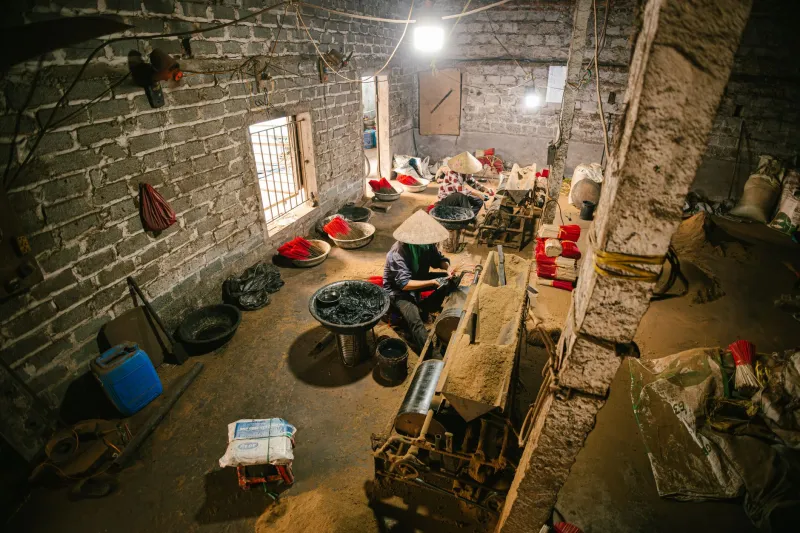
From small-batch cheesemakers in Vermont to precision metalworkers in western Pennsylvania, a distinct category of manufacturer has emerged: businesses that have received serious expansion offers, evaluated them carefully, and walked away. Not out of timidity, but out of strategic clarity. They understand something that many scaled competitors have forgotten—that beyond a certain threshold, growth stops being an asset and starts being a liability.
For wholesale buyers and procurement professionals, this philosophy deserves serious attention. The producers who cap their own growth are frequently the ones delivering the most consistent product, the most responsive service, and the most durable long-term partnerships.
The Growth Trap That Most Producers Don't See Coming
The conventional expansion narrative runs something like this: a regional producer develops a product with genuine market appeal, attracts a major retail account or distribution contract, scales up production to meet demand, and in doing so, transforms a craft operation into a commodity business. The margins compress. The workforce turns over. The quality control that made the product distinctive in the first place becomes harder to maintain at volume.
This pattern is familiar enough that some East Coast producers have started treating unsolicited growth opportunities with the same caution they might apply to an unfavorable contract clause. The question they ask is not simply can we scale to meet this demand? but what do we give up if we do?
A cooperage in the Hudson Valley that produces small-run barrels for regional distilleries offers a useful illustration. When a national spirits company approached them about becoming a primary supplier, the numbers were compelling on paper. The contract would have tripled their annual revenue. It also would have required hiring a workforce three times their current size, sourcing lumber from outside their established regional network, and operating machinery at a pace that their master craftsmen believed would compromise the consistency of their stave work. They declined. Within eighteen months, two of the distilleries they had protected their capacity for had become nationally recognized brands—and remained loyal accounts precisely because the cooperage had not diluted its output to serve a larger master.
Quality as a Supply Chain Variable, Not Just a Marketing Claim
For B2B buyers, quality is not an abstract value—it is a supply chain variable with direct cost implications. Inconsistent product dimensions create downstream fitting problems. Variability in food ingredients disrupts recipe formulations. Unreliable finishing on manufactured components generates warranty claims. When a supplier scales beyond its quality management capacity, the buyer absorbs the consequences.
Smaller East Coast producers who have deliberately capped their growth tend to operate with quality control structures that are simply not replicable at scale. Their inspection processes are often embedded in the production workflow rather than bolted on at the end. Their workforce carries institutional knowledge that cannot be transferred to a new hire in a two-week onboarding session. Their material sourcing relationships—often built over years with regional farms, mills, and raw material suppliers—yield inputs with a consistency that commodity procurement cannot match.
This is not nostalgia. It is operational architecture. And for buyers who have experienced the disruption of a scaled-up supplier delivering product that no longer meets the specifications they originally contracted for, the value of that architecture is measurable in avoided costs alone.
Customization Capacity That Disappears at Volume
One of the less-discussed advantages of working with deliberately bounded producers is their capacity for meaningful customization. A manufacturer running at 60 percent of its theoretical maximum output has the floor time and workforce attention to accommodate a buyer's specific dimensional requirements, labeling preferences, or packaging configurations. A manufacturer running at 95 percent capacity to service a national account does not.
This distinction matters enormously for specialty retailers, regional distributors, and B2B buyers whose own customers expect differentiated product. The ability to order a short run of a regionally distinctive item in a format tailored to your retail environment is, increasingly, a genuine competitive differentiator. It is also a capability that evaporates the moment your supplier prioritizes volume over flexibility.
Several East Coast textile producers have built their wholesale businesses almost entirely around this premise. By maintaining production capacity that is intentionally underutilized relative to theoretical maximums, they can respond to custom orders on timelines that their larger competitors cannot approach. The waiting list for their standard product lines is, for many of their buyers, actually a feature rather than a frustration—a signal that the producer is not overextended.
The Partnership Premium
There is a relational dimension to this conversation that procurement spreadsheets do not easily capture. Producers who have chosen depth over breadth tend to carry a correspondingly deep investment in the success of their existing accounts. When a buyer encounters a problem—a shipment timing issue, a specification question, an unexpected surge in demand—the response from a deliberately small operation is categorically different from what a scaled supplier can offer.
This is partly structural. A producer with forty wholesale accounts knows each of them. The owner or production manager can speak to your order history, your seasonal patterns, and the particular requirements of your downstream customers. That contextual knowledge translates into proactive communication, flexible problem-solving, and a willingness to absorb short-term inconvenience to protect the long-term relationship.
For B2B buyers building sourcing strategies intended to last years rather than quarters, this relational reliability has real financial value. The cost of re-sourcing a key product—qualifying a new supplier, running test orders, managing the transition period—is substantial. Suppliers who stay small and stay focused tend to stay in business, and to stay focused on the accounts that matter to them.
What Buyers Should Look For
Not every small producer is a disciplined one, and not every refusal to grow reflects strategic wisdom. Buyers evaluating East Coast producers through this lens should look for specific indicators: a clear articulation of why the business has chosen its current scale, evidence of long-term account relationships, production capacity that is managed rather than maximized, and a sourcing philosophy that prioritizes regional input quality over cost minimization.
The producers who have genuinely internalized the logic of deliberate restraint can usually explain it clearly. They know what they would lose by expanding, and they have decided that what they would gain is not worth the trade.
For buyers who have spent years managing the downstream consequences of supplier scale-up—the quality drift, the service degradation, the slow erosion of the partnership that made the relationship valuable in the first place—that clarity is, itself, a form of competitive intelligence worth acting on.
At East Coast Trading Co., we work directly with producers who have made exactly this choice. Our sourcing philosophy is built around the recognition that the most reliable regional goods come from operations that understand their own limits—and have the discipline to honor them.